How often have you heard someone sigh, throw their hands up in frustration, and exclaim, ‘Oh, for the love of God!’? Sadly, in modern conversation, using the Lord’s name in vain in various forms has become a commonplace way that people express frustration, anger, or exasperation. People use this expression when they get cut off in traffic, when technology fails, or when a child leaves a mess on the floor. These words are spoken flippantly, often without a second thought. The speaker is in no way thinking about God or speaking to Him in that moment. It genuinely pains me when I hear my beloved Father and Saviour treated with such disrespect. I was thinking about this recently while, once again, hearing God’s love being used as a meaningless throwaway comment. And as I contemplated it more deeply, I thought to myself, “It’s time that Christians begin reclaiming words and phrases that belong in a context of reverence and love for God, rather than allowing the world to empty them of their meaning.” For true believers, ‘for the love of God’ isn’t a phrase of frustration. It’s the very secret of the Christian life. It is our ultimate motivation, our steady compass, and our foundational purpose. The love of God is what gets us up in the morning and keeps us striving for another day. Finding Your “Why”I have a guilty secret about which my husband indulges me graciously. I love learning new things, and I have a serial entrepreneurial spirit. I have taken a ridiculous number of online courses in the area of online business, side hustles, digital marketing, Etsy, investment strategies, and so forth. In many of these trainings, you constantly hear speakers and writers asking: “What is your ‘why’?” They tell you that if you want to stay motivated, build good habits, or achieve success, you have to know the deep-seated reason behind what you are doing. You must have a strong enough ‘why.’ While that concept is often applied to human ambition, at a spiritual level, it is completely biblical. Living the Christian life is incredibly challenging. In fact, walking in holiness, choosing kindness when others are cruel, staying faithful when we are tired, and restraining our sinful flesh is nearly impossible if we don’t have a clear “why.” I have learned that if my motivation is merely to impress people, follow a set of rigid rules, or earn a gold star, I will eventually fall flat on my face. So what is our “why”? The Apostle Paul stated his why in 2 Corinthians 5:14-17:
The word constrain means to impel, urge, hold together, and compel. Paul was saying, “I no longer live for myself. I’m a new man. The reason I preach, the reason I endure beatings, the reason I keep going when my body is weary, is because Christ’s love compels me.” His ‘why’ wasn’t duty, guilt, or ambition. It was love. In Everything You Do
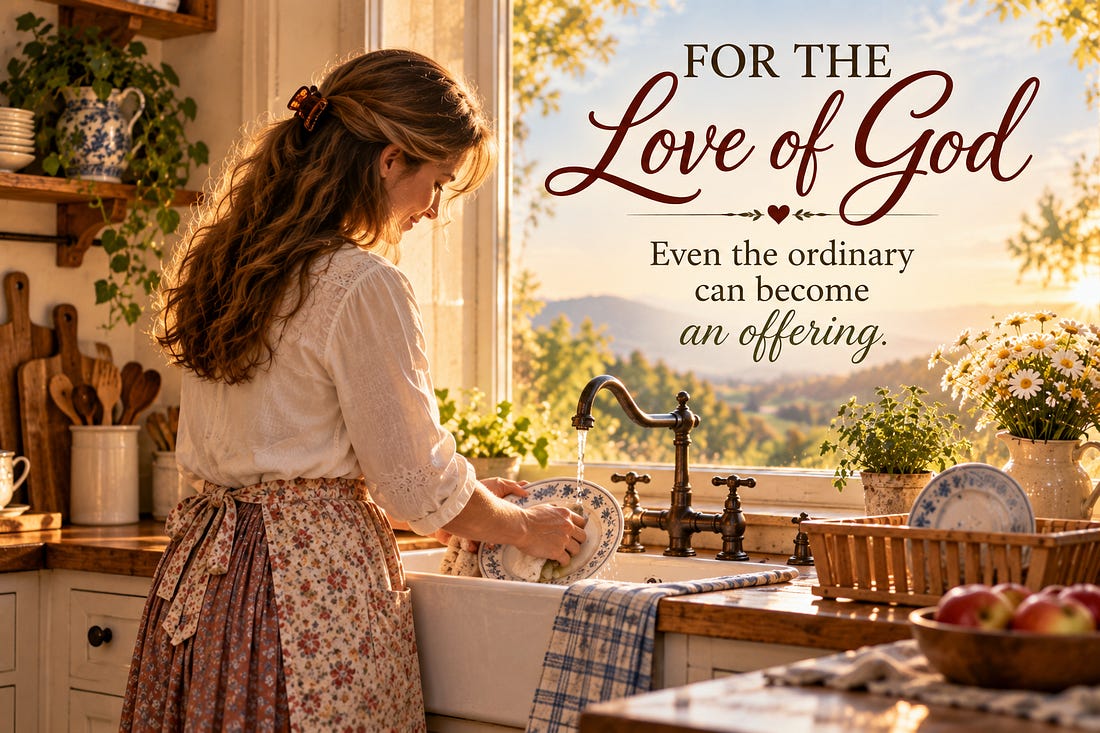
When love for God becomes our core motivation, it changes how we approach every mundane, ordinary moment of our day. We don’t just serve God on Sunday morning when the music is playing, and we are raising our voices in worship. We serve Him in the grocery aisle, at the kitchen sink, on the job site, and behind the steering wheel. Paul reminded the believers in Corinth:
And again to the Colossians:
Think about what that looks like in our daily routines.
And just as importantly, this divine love dictates what we don’t do. Why do I restrain my tongue when I want to snap back in anger? Why do I turn off a movie that displeases the Lord? Why do I refrain from gossip or compromise? Not because I’m being forced by a set of religious rules, but because I love the Saviour who gave everything for me! Jesus said simply, “If ye love me, keep my commandments” (John 14:15). Because He First Loved Us
I don’t know about you, but I’ve been feeling a bit more weary lately with all the spiritual darkness in the world. If I let it, the feeling can become a little overwhelming. I know the answer isn’t to just grit my teeth and try harder. The answer is to remind myself of His love for me.
When I remember Whose child I am, how much He loves me and gave of Himself for me, and faithfully He continues to help me, my strength and spirit are renewed.
If you find it difficult to live your life ‘for the love of God,’ it might be because you haven’t quite yet come to understand just how much He deeply and personally loves you. If you don’t have that close relationship with Him, I urge you to seek Him. Think about any earthly friendship. Closeness doesn't happen by accident. It is built over time through regular, frequent conversations, shared moments, and honest communication. The more time you spend with someone, the better you get to know and love them. The same is true in our walk with the Lord. How do we move God from a distant Supreme Being to a close, personal, beloved Father?
I can promise you something because He promises it Himself. If you will make the effort to draw close to Him, He will draw close to you.
In my experience, that’s when you really start to feel so very loved. When you live in His presence, loving Him back isn’t a struggle. It becomes the most natural, joyful choice in the world to seek to please Him in all things.
And the more you love Him and obey Him, the more love and joy you will experience. A Challenge for the Week Ahead
This week, let’s make a conscious effort to reclaim those five words for ourselves. Before you step out the door, before you respond to an irritating message, before you choose how to spend your evening, pause and ask yourself: “Am I doing this for the love of God?” When ‘for the love of God’ changes from a phrase of worldly exasperation into the guiding principle of our hearts, our ‘why,’ every single word and deed can become an act of love given and received. Blessings, P.S. Maybe the next time you hear someone exclaim, “For the love of God!” you can let those words become your own quiet reminder: Yes, Lord. That is exactly how and why I want to live today. You’re currently a free full subscriber to Simply Angie. If you’d like to offer heartfelt ministry support, you can upgrade to paid (Your voluntary contribution directly helps keep this newsletter free and accessible for everyone).
|