Simply Angie
Salvation is a gift. Spiritual growth and maturity requires cooperation and determination.
I’ve already talked about how precious the gift of our faith is and how God Himself gives us all we need to live out our faith. We just have to access this power through our growing knowledge of Him by reading His Word and spending time with Him. Faith is our foundation, but this is our calling: glory, virtue, growth! Adding To Our FaithWhile the calling of every Christian is to take up the cross and follow Him, we are not left without a roadmap or plan.
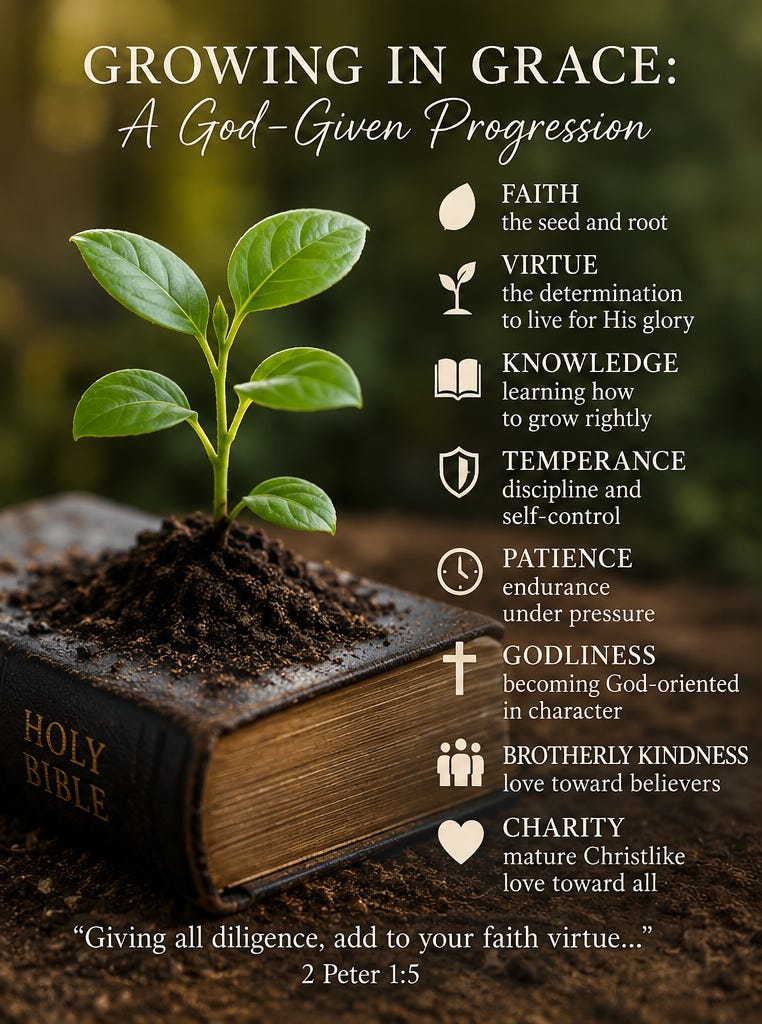
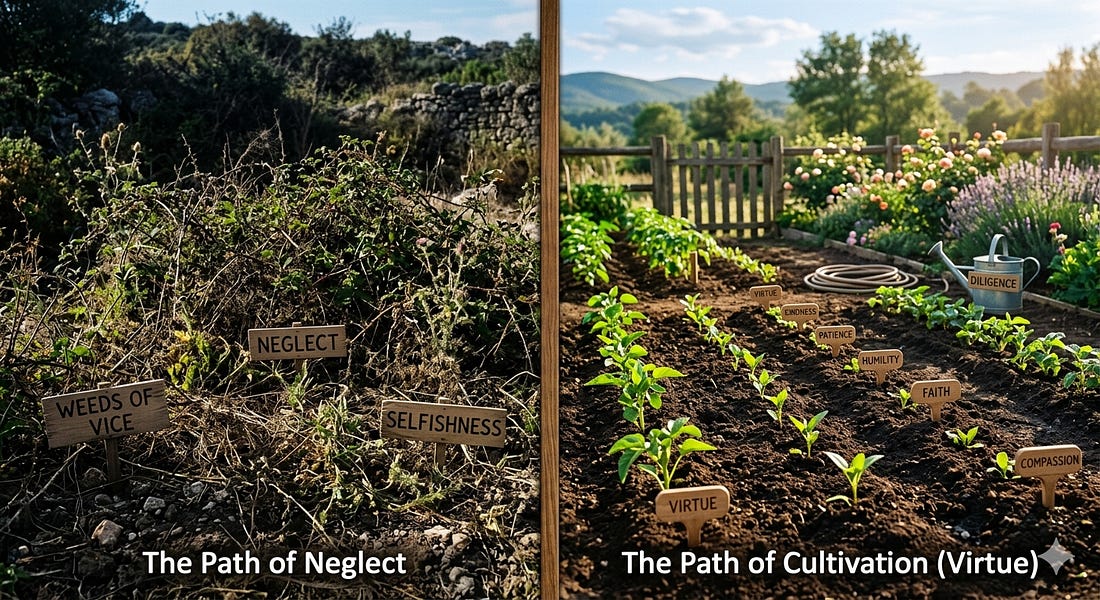
Christian growth does not happen accidentally while we drift through life distracted by the cares of this world. If we neglect our spiritual life, weeds will eventually grow. Jesus Himself warned about hearts being choked by “the cares and riches and pleasures of this life” until fruitfulness disappears (Luke 8:14). Peter is calling us to something intentional. We see God’s formula for living the Christian life throughout the Scriptures, but Peter offers us a very natural progression of how we should deliberately go about growing in grace:
Peter is not giving us a random list of “Christian qualities.” He is describing spiritual growth that builds one layer upon another - almost like constructing a strong house or cultivating a fruitful garden. Notice that word: Diligence. It means conscious, intentional, deliberate action. Virtue doesn’t just sprout up in the garden of your heart without effort; it requires a gardener who is willing to roll up their sleeves. In fact, Peter warns us later in this very passage that if we fail to actively add these things to our faith, we will become spiritually blind, short-sighted, and eventually forget that we were even purged from our old sins (2 Peter 1:9). If we don’t actively move forward, we don’t just stay still—we wither. Beginning at the Beginning
I find it interesting that the first thing God has Peter instruct believers to add to their faith is the quality of virtue.
What exactly is virtue?In our modern English, "virtue" usually sounds passive, almost like a quiet, moral innocence or just "being a good person." Some people even twist it mockingly to make it sound self-righteous. But in the original Greek of 2 Peter 1:5, the word is aretē, and it is incredibly dynamic. In the classical definition, virtue meant moral excellence, courage, and vigor. It wasn't just about the absence of sin; it was about the presence of moral energy. It means fulfilling your specific, designed purpose valiantly. It is the moral courage to stand up and do what is right, even when the world is flowing in the opposite direction. It’s living in a way worthy of one’s calling. That is an amazing and powerful command. The good news is that God does not merely ask us for virtue. He Himself possesses it. We are being called to reflect His Excellence. The Source of Virtue: Christ HimselfJust a few verses earlier, Peter uses the exact same word to describe Jesus’ call to us:
We aren't trying to summon this moral excellence out of our own broken flesh. We are adding His virtue to our faith. He called us by His own excellence, and now we reflect it by intentionally getting to know Him and consciously and daily making decisions that demonstrate a submission to His will and character. The Mindset of VirtuePaul also challenges us on where virtue begins:
You cannot have a virtuous life without a virtuous mind. What fills our mind shapes our character. It’s our job to guard our minds with a diligent determination so that we are filling them with thoughts that are excellent and worthy of a child of God. Virtue is the moral courage to live out what we claim to believe.
That is important because many people today say, “I believe in God,” when what they really mean is, “I believe God exists.” But biblical faith goes much deeper than acknowledging facts about God and His existence. True faith changes the way we live. What you truly believe determines how you act in any given situation. A person can say they believe many things. Our actions eventually reveal what we truly believe. A person may say they trust God, but when fear, temptation, pressure, or inconvenience come, the direction they choose often exposes where their confidence really rests. If I genuinely believe stealing is wrong before God, I will not steal even if I know nobody would ever find out. If I truly believe God is faithful, I will continue trusting Him even when circumstances are frightening. If I genuinely believe His ways are good, I will obey Him even when obedience is difficult. That is virtue. Not perfection. Not personality. Not outward performance for appearances. But genuine faith expressing itself through courageous obedience.
Virtue is not insincere or hypocritical. Nor is it morally passive. It openly rejects evil and clings to good.
Virtue is not a hidden character trait. It becomes visible. Not for self-glory, but so others can see God and be drawn to Him. The Modern Counterfeit: Niceness vs. Goodness
Because we’ve lost the true definition of virtue, the church today is full of cultural counterfeits. We have confused the “form of godliness” with godly character. Consider the difference between what the world calls “virtue” and what God expects of us:
Biblical virtue includes: Conviction, Courage, Integrity, Holiness, Moral Strength, Loyalty, Sacrifice, Moral Purity, Responsibility, Initiative, Humility, Steadfastness, Diligence, and Love Jesus was loving, yet bold. Gentle, yet uncompromising. And true biblical love is not passive. Sometimes what the world calls “love” is actually cowardice; avoiding difficult conversations, refusing correction, or tolerating destructive behavior because standing for truth feels uncomfortable. But real love is willing to do difficult things for someone’s good. A loving parent disciplines a child. Virtue is not merely avoiding bad behavior. It is the intentional pursuit of moral excellence through the power of God. It is choosing truth when deception would be easier. Purity when compromise is available. Courage when fear presses in. Discipline when flesh wants comfort. Love when selfishness would be simpler. Cultivating VirtueVirtue does not happen accidentally. It must be cultivated intentionally. A neglected garden naturally grows weeds. A cultivated garden produces fruit. Likewise:
We train our hearts and minds toward godliness over time through obedience, surrender, Scripture, prayer, and daily choices. Like a healthy garden, spiritual fruit rarely appears overnight. But when genuine faith takes root deeply in the heart, virtue eventually begins to grow visibly in the life. And in a world that desperately needs clarity, courage, and truth, visible faith matters more than ever. Not merely faith we speak about. But faith we live. The Christian life was never meant to be stagnant. God did not save us merely so we could escape judgment one day; He saved us to transform us into the image of His Son. Virtue is one of the first visible signs that this transformation is truly taking root. It is faith stepping out of the shadows and becoming visible in daily life through courage, conviction, integrity, and obedience. And while none of us walk this perfectly, every small act of obedience matters. Every time we choose truth over compromise, courage over fear, purity over temptation, or faith over convenience, we are cultivating virtue in the garden of our hearts. In a world increasingly confused about goodness, may our lives quietly and consistently reflect the moral excellence of the God we claim to serve. Blessings, P.S. Take a few quiet moments this week to honestly examine not just what you say you believe, but what your daily choices reveal that you truly believe. Virtue grows every time we choose obedience over convenience, truth over compromise, and faith over fear. Talk to you again soon. Can’t wait?
|